
Prepare For Your Visit
Use the information below to help prepare for your appointment, stay or surgery at Margaret Mary Health.
Safety & security
Hospital team members
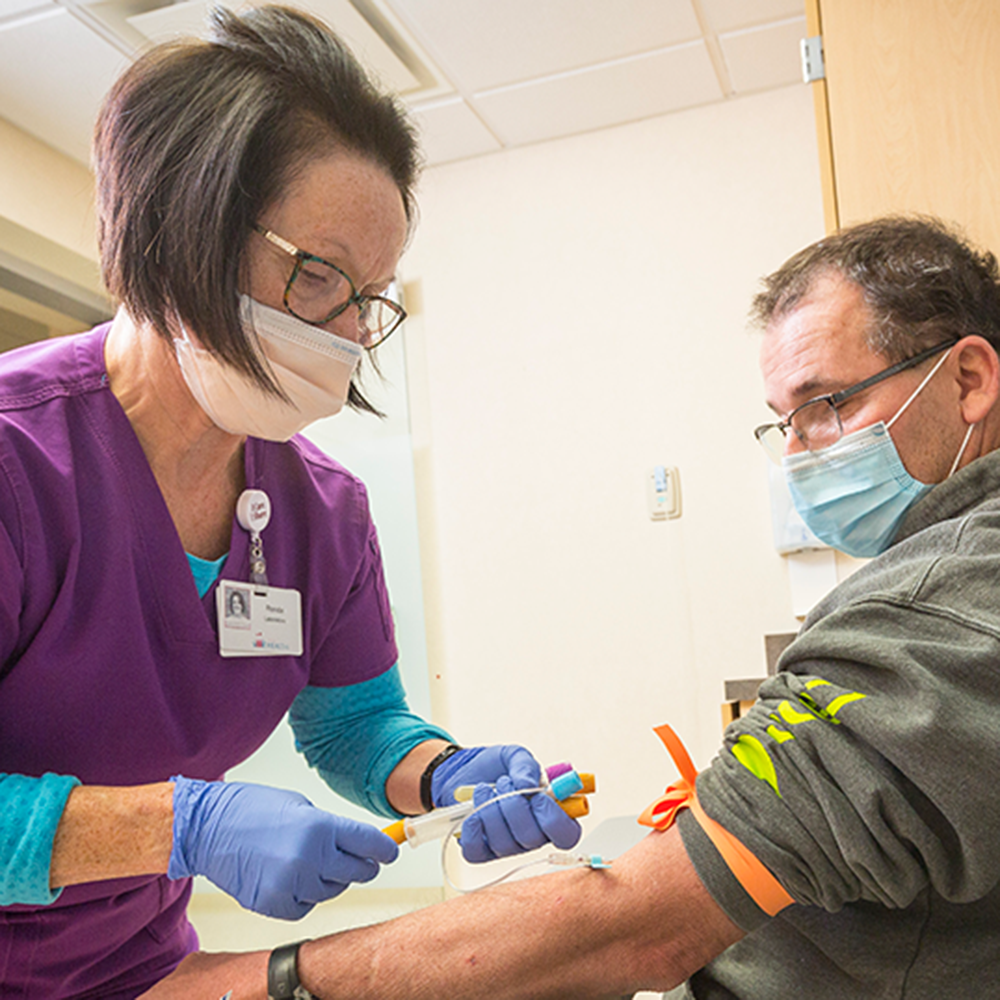
All hospital team members wear photo ID badges. If an unfamiliar person enters your room, request identification and call the nurses’ station. Any team member or physician will be happy to introduce themselves and show identification.
Emergency alarms
For safety reasons, it is necessary to test emergency systems and procedures regularly. During your stay, you may hear alarms and sirens. If you hear an alarm, stay where you are until you are told what to do.
Valuables
Do NOT keep money, jewelry or other valuables in your room as MMH cannot be responsible for items lost or stolen. A safe is available should you need to store anything. If you are missing any personal belongings, notify your nurse as soon as possible. Lost and found items are held in our Housekeeping Department for a short time.
Medication safety
Here is a list of tips to help you avoid medication errors both in the hospital and at home.
- Keep a current list of all medications you take.
- Tell your care team about any allergies you have.
- Ask about any side effects you may experience and what to avoid while taking the medication.
- Make sure you know the name of any prescribed medication and the purpose for which it is being prescribed. Encourage the doctor to write the reason for the medication on the prescription. Writing the reason on the prescription will help the pharmacist avoid/a dispensing error.
- Understanding the directions on your medicine label is key. If the label says, “Take four times a day.”, clarify if this means taking it every six hours, or just during normal waking hours.
- Take your medications as prescribed and for the complete course of treatment. Taking either too much or too little can have can have adverse effects on your health.
Infection prevention
All MMH team members are expected to wash or sanitize their hands frequently. If you do not see us washing our hands or using hand sanitizer, speak up! To prevent the spread of infection, we may wear gloves, gowns, masks, lab coats, and/or protective eye wear or face shields. This is both for your protection and ours.
Fall risk safety
Patients are at a higher risk of falling during their first few days in the hospital for several reasons.
- You are sick and may feel weak.
- You are in new-surroundings.
- You may be receiving medications which can cause drowsiness or dizziness.
- You may have tubes or machines, keeping you from moving around on your own.
Recommended safety tips:
- Take your time when getting up from your bed or a chair. Sit up for a few minutes to avoid getting dizzy.
- Familiarize yourself with your room so you can easily find the bathroom, nurse call light and remote control.
- Give yourself enough time to get to the bathroom.
- Don’t try to rush.
- Wear the non-skid slippers included in your admission kit.
- Report any spills on the floor.
Do not walk on newly mopped floors until they are dry. - Avoid moving quickly or tilting your head back sharply when getting up.
Determining your fall risk
During your admission, our team will assess you for ‘high fall risk’ factors. If you are determined to be a fall risk, you will receive a colored arm band and a sign above your bed and at your door to remind others of your risk. If you are a fall risk, please call the nurses’ station every time before getting up.
Pain Management
Managing your pain
There are many types of pain, including pain after surgery, pain with labor, acute pain, cancer pain and arthritic pain. Each type requires different approaches and may require different therapies to obtain the best relief.
Upon your arrival to the hospital, we will assess your pain and treat it accordingly. We understand pain relief is important to you and our priority is to provide pain control in a safe, effective manner. Together, with your help, we will make your pain bearable and if possible, make it go away altogether.
In order to be partners in your pain control, we ask you to provide a list of all medications you are currently taking including prescriptions, over-the counter and herbal supplements. Be sure to use the pain control scale accurately, ask questions about your medications and share any concerns you have.
Pain assessment
The first step is to assess your pain. Your nurse or doctor may ask you to rate your pain to help them know the type and degree of pain you have. This also helps to determine if the pain is the same, lesser or greater than it was before. During this assessment, we will:
- Ask if you are having pain.
- Ask you to describe your pain and the location most effected.
- Explain the pain scale to you and ask you to rate your pain .
- Work with you to develop a pain plan including pain medication as well as other treatments which may make you more comfortable.
- Minimize the side effects of the pain medication used.
Pain control
Chronic pain: Chronic pain from prolonged surgical recovery, arthritis, migraines, cancer or any other chronic condition often requires a ,different course of treatment.
Acute pain: Pain can be treated with narcotic pain relievers which can be given in the vein, muscle, mouth or by regional anesthesia (spinal, epidural or nerve block). You may be given a device called a PCA which allows you to control the amount and frequency of the medication being given. These medications may cause drowsiness, constipation, nausea and itching. Because surgical pain lessens over the first few days, you will be switched to an oral medication before discharge.
Non-drug therapies
Both drug and non-drug treatments can be successful in helping to prevent and control your pain. Together, you and your doctor will decide what is best for you.
Physical Methods
• Massage
• Hot/Cold Therapy
• Physical/Occupational Therapy
• Immobilization
• Relaxation
• Position Changes
Behavioral Methods
• Slow-Breathing Techniques
• Music Therapy
• Distraction
• Guided Imagery
• Humor
Pain medicine dangers
Pain medications have a strong potential for addiction and abuse. Addiction can develop over a short period of time. Almost 2 million people in the US abuse prescription pain medication.
- Pain medication cannot be shared with others or used in any way other than prescribed.
- Overuse may produce tolerance to pain medications.
- Possible side effects include sedation, respiratory depression, hives, itching, impaired thinking and functioning. Severe side effects may require emergency medical care and may result in coma or death.
- Suddenly stopping high-dose pain medication may result in cramping, anxiety, rapid heart rate, high blood pressure, nausea, etc. It is important to use the medication as prescribed.
Meals
Margaret Mary’s Nutrition Services Department has an experienced culinary team who can prepare meals according to the diet recommended by your physician.
Our Patient Menu Coordinator will stop by your room to help you understand your special diet and assist you with your meal selections.
Our Registered Dietitians are also available for brief nutrition counseling if needed.
Meals are served at the following times:
- Breakfast – 7:30 to 8 AM
- Lunch -11:30 AM to Noon
- Dinner – 5:15 to 5:45 PM
Patient care
Bedside reporting
This is the exchange of information involving the leaving nurse, the on-coming nurse and you, the patient, at shift change. The goal is to improve communication among caregivers and to involve patients in their care.
Care team phones
You may notice members of our team using specialized mobile devices to assist with your care. While these may look like personal smartphones, they are actually part of new technology designed to support more timely treatment.
Connected directly to your electronic health record, these devices allow caregivers to communicate, document and manage tasks right from the bedside, so they can respond more quickly to your needs.
Discharge process
When your doctor believes you are ready to leave the hospital, he or she will go over any instructions with your nurse. Once this happens, your nurse will review the orders and get you home in a timely manner. Please keep in mind this process may take a few hours to ensure everything is accurate—medications, follow-up visits, restrictions, etc.
Discharge arrangements should be discussed with your doctor in advance so you may plan for transportation home. Leaving the hospital involves the following two steps:
1. Your physician will write a discharge order on your chart. Please be aware this process may take some time. Your nurse will inform you of an approximate discharge time. The nurse will provide you with discharge instructions as ordered by your physician.
2. You will be escorted by wheelchair to the main entrance by a member of the nursing staff. When preparing to leave your room, remember to gather your personal belongings. Check with your nurse to see which supplies in your room you can take home.
Discharge planning is available for patients and their families who may require assistance after their hospital stay. Our team of social workers will assist in arranging Home Care, Meals-on-Wheels, transfers to other facilities or transportation needs. Information on community resources and family support groups is also available. There is no charge for this service.
Hourly rounding
Hourly rounding is an important part of providing you with the best care possible. The purpose of hourly rounding is so we can check on you and your wellbeing. During your stay with us, you will be visited by one of your caregivers each hour from 6 a.m. until 10 p.m. and every two hours from 10 p.m. to 6 a.m.
Lab work and routine X-Rays
Daily lab draws and X-Rays are ordered by 4 a.m. so results are available when the doctor rounds in the morning. Please keep in mind your doctor may order lab draws at other times of the day, too.
Medication reconciliation
You will be asked which medications you are currently taking. It is very important you have an accurate list in order to avoid hazardous interactions. If you need a medication record, ask our staff.
Clergy & spiritual services
Chapel
Located on the first floor, our interfaith chapel is open around the clock for meditation and prayer.
Clergy Visits
Our local clergy are an integral part of our healing team and are encouraged to make hospital visits. If you don’t have a pastor/priest, we can contact one for you.
Communion
Eucharistic ministers can distribute communion to patients at their bedside.
Faith in the Workplace
This voluntary prayer group consists of hospital team members who pray for our patients, staff and physicians daily. If you would like to be added our prayer list, notify your nurse or social worker.
Visitors & gifts
Support person
A support person is permitted to be with our patients at all times unless prevented by medical circumstances. These individuals, subject to patient consent, can visit when designated by you (regardless of time) and includes, but is not limited to a spouse, domestic partner, another family member or friend.
Consent can be withdrawn or denied at any time. Each support person is encouraged to visit the nurses’ station before proceeding to your room.
Visitor restrictions may be implemented for safety reasons if necessary.
MMH Café
The MMH Café is located on the first floor. When you walk in the main entrance, turn to the right.
Hot Breakfast:
7 a.m. – 9:30 a.m.
Lunch:
11 a.m. – 1:30 p.m.
Dinner:
5 p.m. – 6:30 p.m
Mail, flowers and balloons
Hospital volunteers or staff members are available to deliver mail and flowers to your room throughout the day. Only cut flowers are permitted. Mail received after your discharge will be forwarded to your home. Flowers are not permitted in the Intermediate Care unit. MMH ls a latex-free environment, meaning we only allow shiny mylar balloons inside our facility.
Smoking policy
Margaret Mary Health is a tobacco-free facility. For the health and safety of our patients, visitors and team members, smoking and/or the use of tobacco is NOT permitted anywhere in the hospital or on hospital grounds. Smoking cessation is available by request.