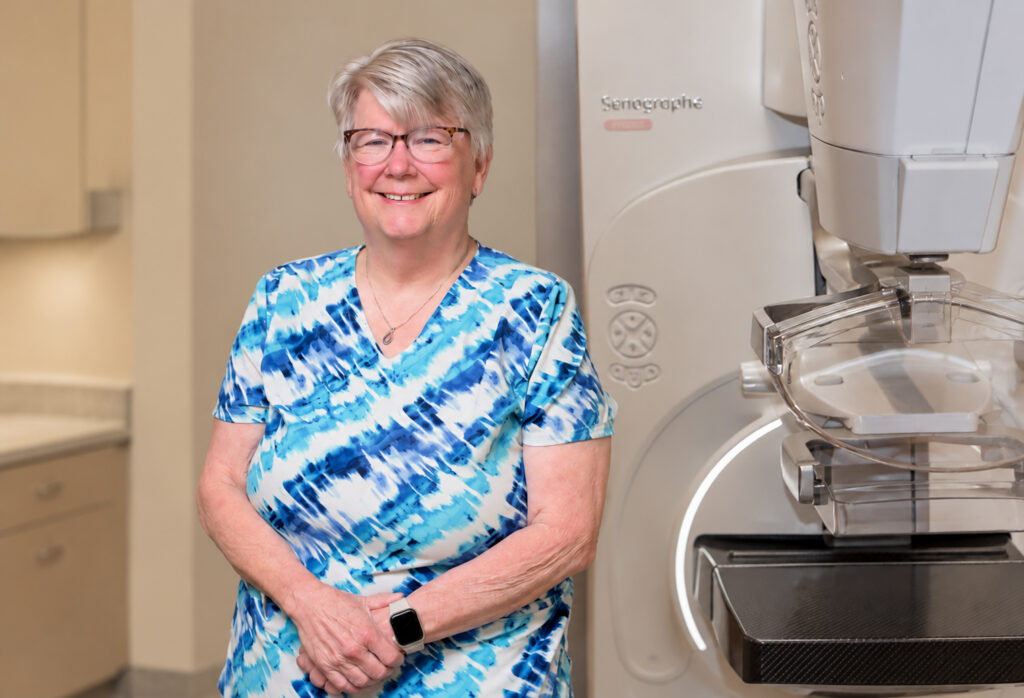

A few months ago, I took on the newly created role of Hospice Community Liaison for Margaret Mary Health. My objective in this role is to develop relationships with area care providers to improve the quality and timeliness of hospice care in our community. Over the past few months, I have connected with skilled nursing facilities, social workers, physicians, patients, and others who provide care for seniors in our area. These conversations have formed my knowledge about the care provided by our multidisciplinary hospice team and my conviction that hospice care is for the living.
According to the National Hospice and Palliative Care Organization (NHPCO), the median hospice stay in America is 17 days. Half of patients electing hospice, get 18 days or less. One in 10 gets 2 days or less. These statistics reflect that hospice referrals are not timely enough for patients and families to receive all their rights and benefits under the program. This is disheartening given what hospice, a covered benefit, can add to patients and families during a difficult time. Once elected, hospice benefits can be renewed and revoked at any time. A landmark 2007 study conducted by Stephen R. Connor and colleagues from the (NHPCO), demonstrated that many patients, with symptom management and comfort care, live longer with hospice care than without it.
When people hear the word hospice, they often think of life’s final days. While hospice care does provide compassionate support at the end of life, its true purpose is so much more than that. Hospice is not about giving up. It is about helping people live as fully, comfortably, and meaningfully as possible.
At its heart, hospice focuses on the quality of life. When a person is facing a serious illness, the challenges can feel overwhelming. Pain, fatigue, anxiety, and uncertainty can make it difficult to enjoy everyday moments. Hospice brings together a team of healthcare professionals who work to manage symptoms, provide comfort, and support both patients and families. By addressing physical, emotional, and spiritual needs, hospice creates space for patients to focus on what matters most. Hospice helps make those moments possible by reducing discomfort and providing the support needed to remain engaged in daily life.
Providing care for a loved one can be physically demanding and emotionally exhausting. Family members often find themselves balancing work, household responsibilities, and caregiving duties while trying to process their own emotions. Hospice provides a lifeline through education, guidance, and tools specifically for caregivers. Nurses, aides, social workers, chaplains, and volunteers become partners in care, helping families feel less alone and more confident in supporting their loved ones.
One of the greatest gifts hospice offers is the opportunity for meaningful connection. In the busyness of life, important conversations are often postponed. Hospice can provide the time and support needed for patients and families to share stories, express gratitude, seek forgiveness, and strengthen relationships. Many families discover that hospice allows them to focus less on medical crises and more on being present with one another. This is a specific focus of our social worker and chaplain, proving healing can happen when curing is no longer possible.
Every person’s journey is unique, and hospice respects each patient’s goals, values, and wishes. Some may desire to stay at home surrounded by familiar comforts. Others may want to spend time creating lasting memories with family and friends. Hospice helps patients maintain dignity and control by placing their preferences at the center of care.
One of the most common misconceptions about hospice is that accepting hospice means giving up hope. In reality, hospice shifts the focus of hope. Hope may no longer be centered on a cure, but it can be focused on comfort, time together, meaningful experiences, and living each day to its fullest. Families often tell us they wish they had chosen hospice sooner because of the positive impact it had on their loved one’s quality of life.
Another common misconception is that hospice patients cannot see their primary care physician or receive treatment of any kind. This is far from the truth. Those who choose the hospice journey work with their provider and the hospice team in a trusted partnership to coordinate goals and clinical recommendations to promote comfort and quality of life. Patients will receive an individualized evaluation and medication review on intake. Hospitalization remains available when clinically appropriate and aligned with patient goals of care. Certain treatments may continue when the primary purpose is symptom management and quality-of-life enhancement. This can include oxygen, physical and occupational therapy, wound treatment, and supportive cardiac medications, among other things.
Hospice celebrates life. Hospice helps patients find comfort; families find support, and loved ones find connection. It reminds us that while we cannot always add more days to life, we can add more life to every day.
Submitted by Jenny Geers, BSN, RN, Hospice Community Liaison, Margaret Mary Health Hospice. MMH Hospice is a 5-star rated Hospice according to the Centers for Medicare and Medicaid Services. Please call 812-933-5125 for information or a private, personalized consultation. Jenny can be reached at jenny.geers@mmhealth.org.