
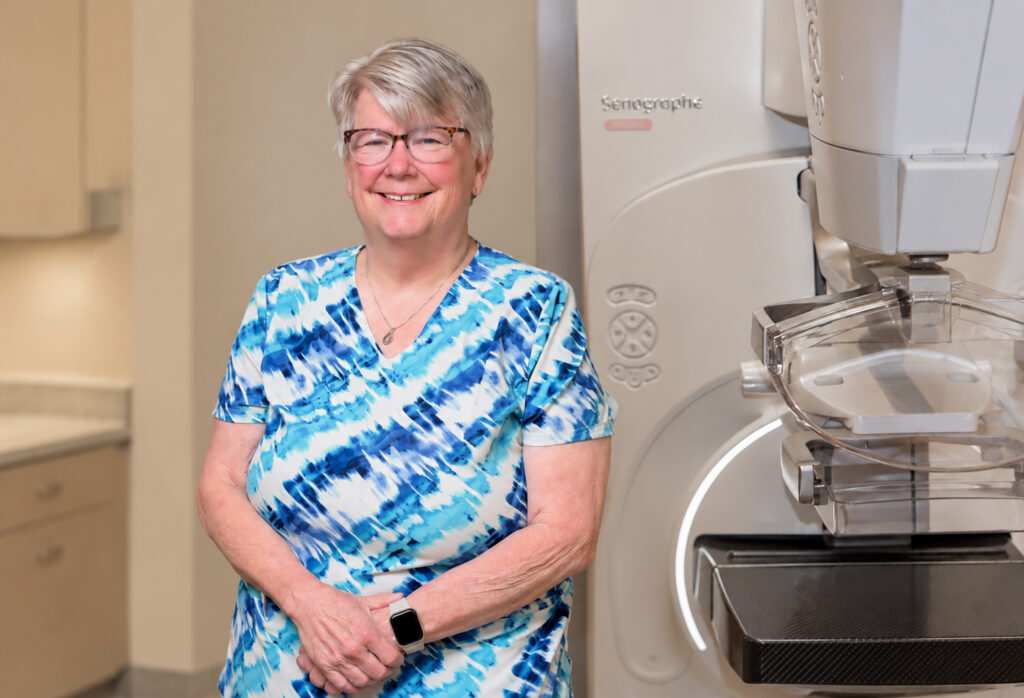
Breast cancer screening can be easy to put off—especially when you feel healthy and haven’t noticed any changes. But that’s exactly when screening is designed to help.
Mammograms can detect breast cancer before a lump can be felt or other symptoms develop. When breast cancer is found early, it is often easier to treat and outcomes are generally better. That’s why routine mammograms are an important part of preventive care, even when you feel perfectly healthy.
When should I start getting mammograms?
Women at average risk for breast cancer should begin having annual mammograms at age 40. Regular screening gives your healthcare team the opportunity to look for changes in breast tissue before you notice symptoms.
Your individual risk may affect when screening should begin. Talk with your healthcare provider about your personal and family health history and whether you may benefit from earlier or additional screening.
What if breast cancer doesn’t run in my family?
Family history is important, but it isn’t the only factor that affects breast cancer risk. In fact, many women who develop breast cancer do not have a family history of the disease. Age, genetics, breast density and certain lifestyle and reproductive factors can all play a role. If you have a strong family history of breast or ovarian cancer, a known genetic mutation or other factors that put you at higher risk, your provider may recommend beginning screening earlier or using additional types of imaging.
Should I wait until I notice a lump?
No. A mammogram is a screening tool designed to find breast cancer before symptoms appear. It’s still important to know what is normal for your breasts and tell your healthcare provider if you notice a new lump or thickening, changes in the size or shape of a breast, dimpling or other skin changes, nipple changes or unusual discharge. If you notice a concerning change, don’t wait until your next routine mammogram to have it checked.
What if I’ve been putting it off?
If you’re overdue for a mammogram, you’re not alone. Busy schedules, concerns about discomfort, anxiety about results or simply forgetting can make it easy to delay routine screenings.
Breast Cancer Awareness Month is a good reminder to check when you had your last mammogram. If you’re 40 or older and it’s been more than a year, now is a good time to schedule your next screening.
Screening mammograms are the best way to detect breast cancer early, when it is most curable. To schedule an appointment, call 812.933.5602.