Managing diabetes has come a long way. One of the most exciting advancements in recent years is the use of Continuous Glucose Monitors (CGMs) — small, wearable devices that help people track their blood sugar levels in real time.
What is a CGM?
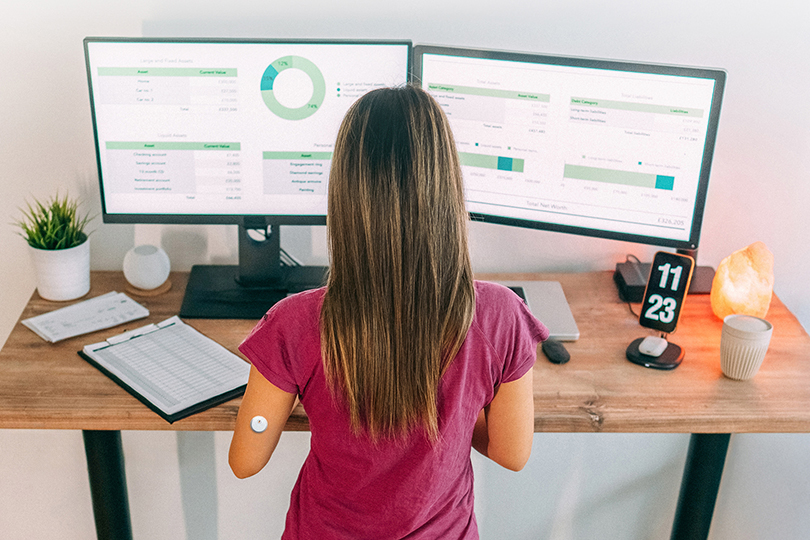
A CGM is a sensor placed just under the skin, usually on the arm or abdomen, that continuously measures glucose levels. The data is sent wirelessly to a smartphone, receiver or insulin pump. This allows users to see how their glucose levels change throughout the day — including during meals, exercise, stress and sleep.
Why it matters
Unlike traditional finger sticks that show a single glucose reading, CGMs provide a complete picture of glucose trends and patterns. This helps patients and their healthcare teams make informed decisions about food, medication and activity. Many CGMs also include real-time alerts for highs and lows, helping prevent serious complications.
Benefits
- Better control: Users often experience lower A1C levels and fewer glucose swings.
- Fewer finger sticks: Most CGMs require little to no calibration.
- Improved confidence: Real-time data helps users feel more in control of their health.
- Peace of mind: Alerts can warn patients — and caregivers — before blood sugar drops or spikes dangerously.
Learn more
CGMs are changing the way diabetes is managed. If you think you or someone you know could benefit from CGM technology, call our diabetes care team at 812.933.5000.
Learn more about our diabetes and endocrinology services.