
According to the Betty Allen Gynecological Cancer Foundation, in 2021, it is estimated more than 116,500 women will be diagnosed with a gynecological cancer. Gynecological cancers start in a woman’s reproductive organs. The main types of gynecological cancers include cervical, ovarian, uterine, vaginal and vulvar.
While there is no known way to prevent gynecological cancers, there are things you can do to lower your chances (listed below). It’s important to find gynecological cancers early when treatment can be most effective.
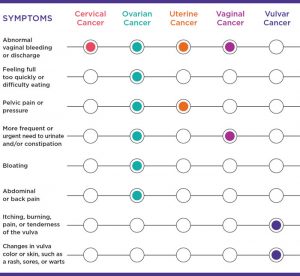
- Pay attention to your body and know what is normal for you. If you have abnormal vaginal bleeding, or if you have any other signs and symptoms of gynecological cancer for two weeks or longer and they are not normal for you, talk to your doctor right away. These symptoms may be caused by something other than cancer, but the only way to know is to see a doctor. Symptoms vary based on the type of cancer. Check out the table below for a list of symptoms for each type of cancer – courtesy of the CDC.
- Make healthy lifestyle choices. For overall good health, eat a diet rich in fruits and vegetables, exercise regularly, maintain a healthy weight, avoid smoking and practice safe sex.
- Know your family history and be sure to share it with your doctor.
- Get the HPV vaccine if you are at an age when it is recommended. It protects against the types of HPV most often causing cervical cancer, vaginal and vulvar cancers. The vaccine is given in a series of three shots and is recommended for girls ages 11 & 12 and those ages 13 – 26 who did not get any or all of the shots when they were younger.
- Get regular Pap tests. Pap smears are one of the most reliable and effective cancer screening tests available. Pap smears can find precancerous changes on the cervix that can be treated so cervical cancer is prevented. A Pap smear can also find cervical cancer early, when treatment is most effective.
- Get an HPV test if it is recommended by your doctor.
To learn more about gynecological cancers, visit any of the following resources:
National Ovarian Cancer Coalition
Betty Allen Gynecological Cancer Foundation
If you’re in need of an OB/GYN provider, click here for a list of providers.