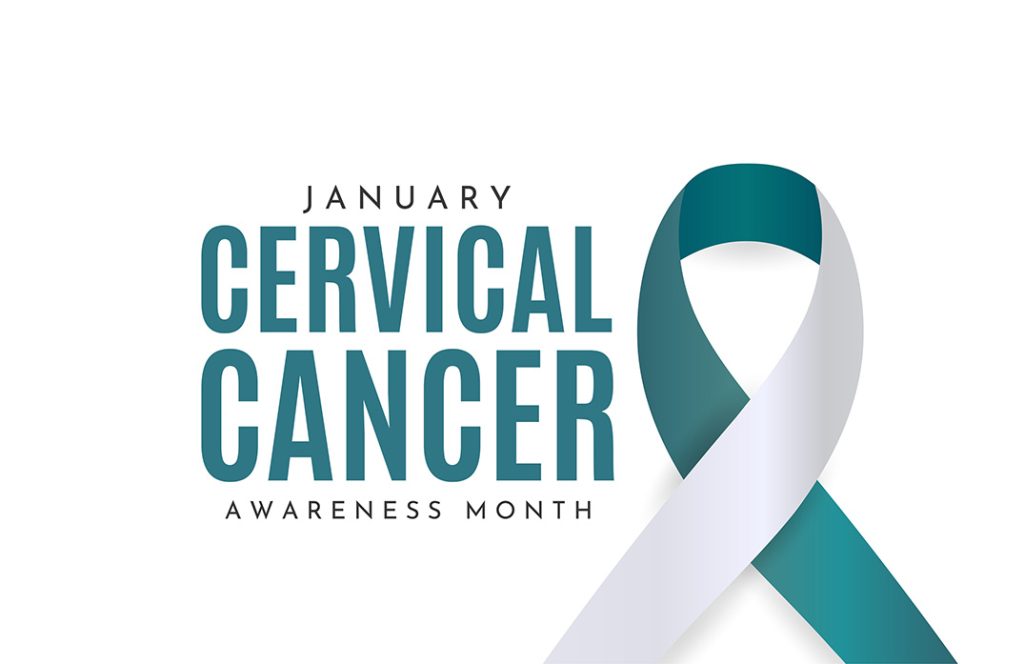
January is Cervical Cancer Awareness Month. Cervical cancer occurs when normal cells in the cervix change into abnormal cells and grow out of control. The good news is most women whose cervical cancer is found and treated early do very well.
Pap testing was introduced back in 1941 to screen for cervical cancer. Before this time, cervical cancer was the leading cause of cancer-related death in women. Since the introduction of the pap test, its occurrence has declined by more than 70 percent.
The pap test consists of a pelvic exam, in which your provider will use a small brush to collect fluid. Depending on your age and history, your provider may just do a pap test, just an HPV test or both. If there are abnormal findings, your provider will follow up with a biopsy.
Cervical cancer can be treated in many different ways, including surgery, radiation therapy or chemotherapy. After treatment, follow-up testing will be performed to see if the cancer returns.
There are many risk factors that put a woman at greater risk for developing cervical cancer. These include becoming sexually active at a young age, having multiple sexual partners, having a history of a sexually transmitted infection, immunosuppression, cigarette smoking and a family history of cervical cancer.
HPV is a sexually transmitted virus that is central to the development of cervical cancer. In 99.7 percent of cervical cancer cases, HPV was detected. It is estimated that nearly 80 percent of sexually active adults will acquire genital tract HPV before age 50. In most cases, HPV goes away on its own within two years without health problems. When HPV does not go away, it can cause health problems like genital warts and cancer.
Typically, early cervical cancer has no symptoms, which reiterates the importance of routine screening. A vaccine is also available to prevent the HPV types that most commonly cause cancer. When cervical cancer does cause symptoms, these symptoms include irregular or heavy vaginal bleeding, bleeding after sex or bleeding after menopause.
Current screening guidelines of the American College of Obstetricians and Gynecologists (ACOG) recommend receiving your first pap screening at age 21 and continuing through age 65. Talk to your provider to decide what interval for pap screening is right for you.
Many women do not adhere to screening guidelines, and as a result, there has been an increase of cervical cancer over the last 10 years. If you’re due for your routine pap test, schedule your screening. Also, be sure to practice safe sex, consider getting vaccinated for HPV and if you smoke, quit. Together, we can prevent cervical cancer.