Blood pressure is the force of blood against your artery walls as it circulates through your body. Blood pressure normally rises and falls throughout the day, but it can cause health problems if it stays high for long. High blood pressure can lead to heart disease and stroke—leading causes of death in the United States.
Several factors that are beyond your control can increase your risk for high blood pressure. These include your age, sex, and race or ethnicity. But you can also work to reduce your risk by taking the following steps:
- Eat a healthy diet.
- Maintain a healthy weight.
- Be physically active.
- Limit alcohol use.
- Don’t smoke.
- Prevent or manage diabetes.
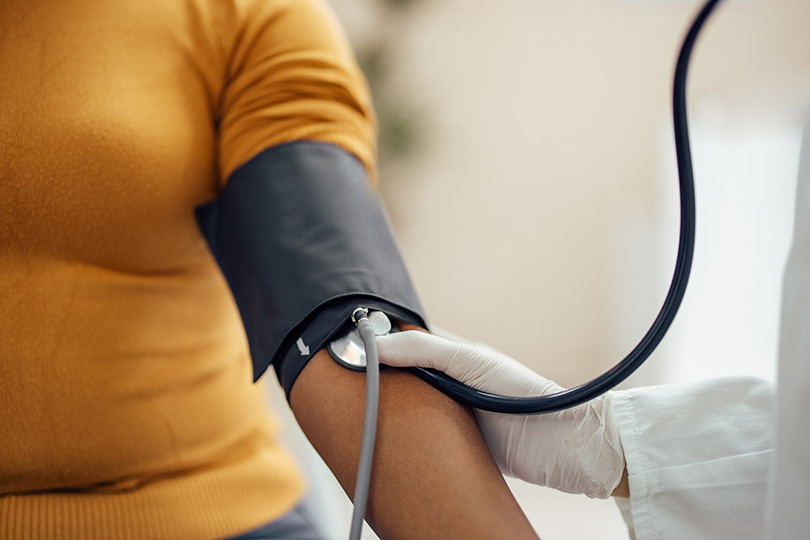
High blood pressure usually has no warning signs or symptoms, so many people don’t realize they have it. That’s why it’s important to visit your healthcare provider regularly. Your blood pressure is taken by wrapping an inflatable cuff with a pressure gauge around your arm to squeeze the blood vessels. The gauge measures the pressure in the blood vessels when the heart beats (systolic) and when it rests (diastolic).
If you have high blood pressure, your provider may prescribe medication to treat it. Lifestyle changes, such as the ones listed above, can be just as important as taking medicines.
Talk with your provider about the best ways to reduce your risk for high blood pressure. Click here for a list of primary care providers accepting patients.