

It’s 2020 and for most food companies, that means it’s time to switch to the new nutrition facts label. Found on many of your favorite foods, the label hasn’t been updated in almost 30 years. So much has changed in that time in terms of nutrition science and the way we eat, so the FDA decided the label needed a makeover.
If you’re new to reading labels or even if you’re an old pro, it helps to have a guide to detail the most important changes. Use this guide to your advantage as you ring in the New Year by making healthier food choices.
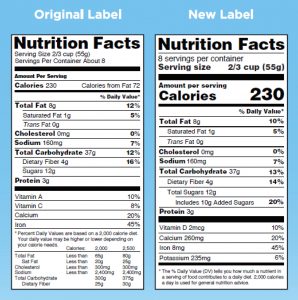
Added Sugars
- What’s Changed: For the first time, ‘Added Sugars’ is listed and includes total grams and Percent Daily Value.
- Why is This Important: High intake of added sugars is linked to chronic health conditions like obesity, diabetes and heart disease.
- How to Use It: Aim to choose products with the least amount of Added Sugar as possible, avoiding any item with greater than 10 grams or 20% Daily Value.
Calories & Serving Size
- What’s Changed: The font size for calories and serving size are larger. Also, many serving sizes were updated to reflect what people actually consume.
- Why is This Important: Larger font means this information is easier for customers to find. Keep in mind all the information on the food label is based off the serving size.
- How to Use It: Eat the portion size listed. If you are choosing snack foods, aim for items between 150 to 200 calories with limited added sugar or salt.
Micronutrients
- What’s Changed: Vitamin D and potassium were added, and Vitamin C and A were removed. The actual amount also must be listed for required micronutrients in addition to the Percent Daily Value.
- Why is This Important: Many Americans have low intake of potassium and Vitamin D. Eating foods with more Vitamin D helps with bone health and immunity. Eating foods with more potassium helps with high blood pressure and stroke prevention.
- How to Use It: Choose food items that have 20% or more of the Daily Value for micronutrients listed. If you have chronic kidney disease and were told to watch your potassium intake, use the milligrams listed as a guide.
Fiber
- What’s Changed: Percent Daily Value is now listed.
- Why is This Important: Many Americans do not eat enough fiber in their diet. Fiber helps decrease risk for many chronic conditions including diabetes, heart disease and digestive cancers.
- How to Use It: Choose foods that have more than 20% of the Daily Value for fiber. Another rule of thumb is to choose items with 5 grams of fiber or more.