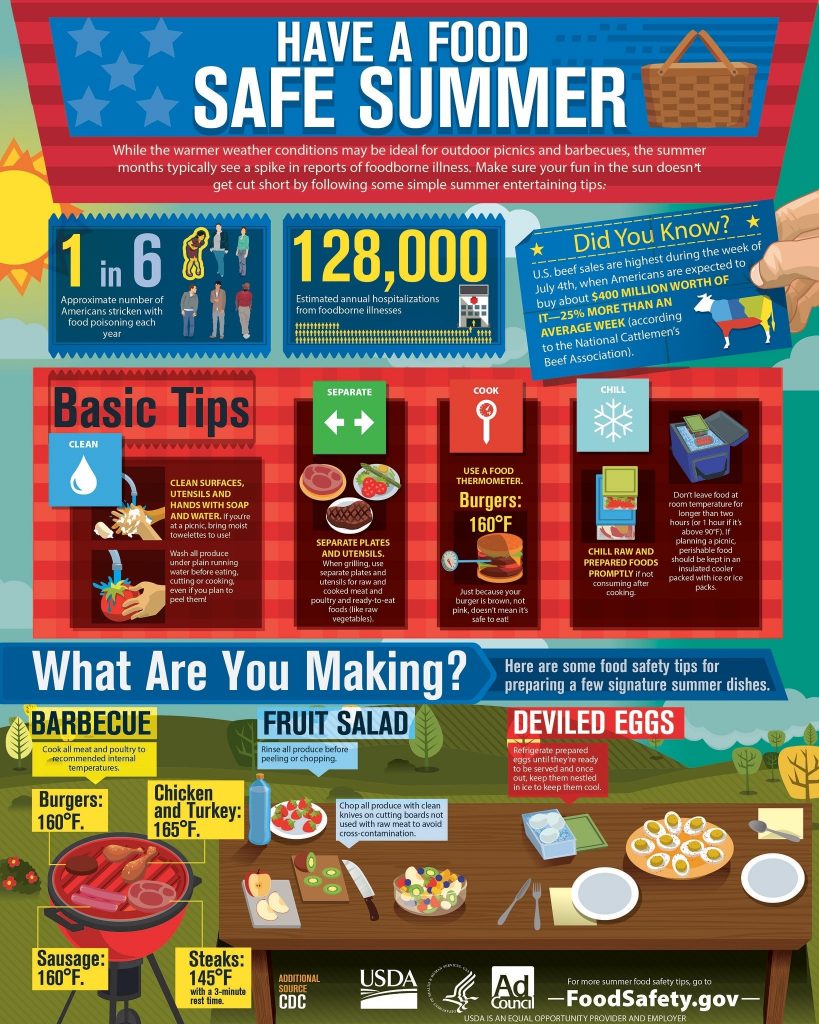
While backyard barbecues may look a little different this summer, what shouldn’t change is practicing food safety to help prevent food-borne illness. Every year, more than 125,000 people are hospitalized for food-borne illness, with a peak usually seen in summer months. According to foodsafety.gov, preventing food-borne illness is as simple as following these four steps:
Clean
- Wash Your Hands – Wash your hands with warm water and soap for at least 20 seconds prior to cooking, after handling any raw meat or eggs, after touching garbage or after coughing or sneezing.
- Wash Surfaces and Utensils – Wash with soapy water after handling raw meat or eggs.
- Wash Fruits and Vegetables – Wash all produce with running water and towel dry with a paper towel or clean cloth. Produce with thick skins should be scrubbed with a brush to remove surface debris. Do not wash meat or poultry.
Separate
- Use Separate Cutting Boards – Do not use the same cutting board, utensils or plates for produce and raw meat or eggs. Many stores sell color-coded cutting board sets with separate boards for produce and meat.
- Keep Foods Separate – Never store raw meat with produce. Keep foods separated in different containers or bags.
Cook
- Cook to the Right Temperature – The color of meat is not a reliable indicator of doneness. The only way to make sure meat is cooked safely is by checking the temperature with a meat thermometer. Cook chicken and turkey to 165 degrees Fahrenheit, burgers and sausage to 160 degrees Fahrenheit and steak, fish and pork to 145 degrees Fahrenheit. When using a thermometer, remember to place in the thickest part of the food for an accurate reading.
- Keep Food Hot After Cooking – Hot food should be kept at 140 degrees Fahrenheit after cooking. Most food-borne illness occurs when food temperatures fall into the temperature ‘danger zone,’ which occurs at 40 to 140 degrees Fahrenheit. To keep food warm, consider using a warming tray or slow cooker.
- Microwave Safely – Reheated foods should be heated to 165 degrees Fahrenheit to help prevent illness.
- Smoke Meats Safely – Smoking requires a few extra steps to make sure food stay safe. For USDA guidelines, click here.
Chill
- Timing is Key – Food should not sit out for longer than two hours. If it is above 90 degrees Fahrenheit outside, food can only last one hour. If your gathering is going to last longer, use an ice bath to help keep temperatures below 40 degrees Fahrenheit. Check temperatures regularly and if the item goes above 40 degrees Fahrenheit, dispose of it.
- Thaw Safely – Never thaw or marinate foods on the counter. This should always be done in the refrigerator.
- Follow Food Storage Guidelines – Most leftovers last three to four days in the refrigerator or two to three months in the freezer. For more specific guidelines, click here.
For more food safety guidelines or to download the Food Keeper app, visit foodsafety.gov.